
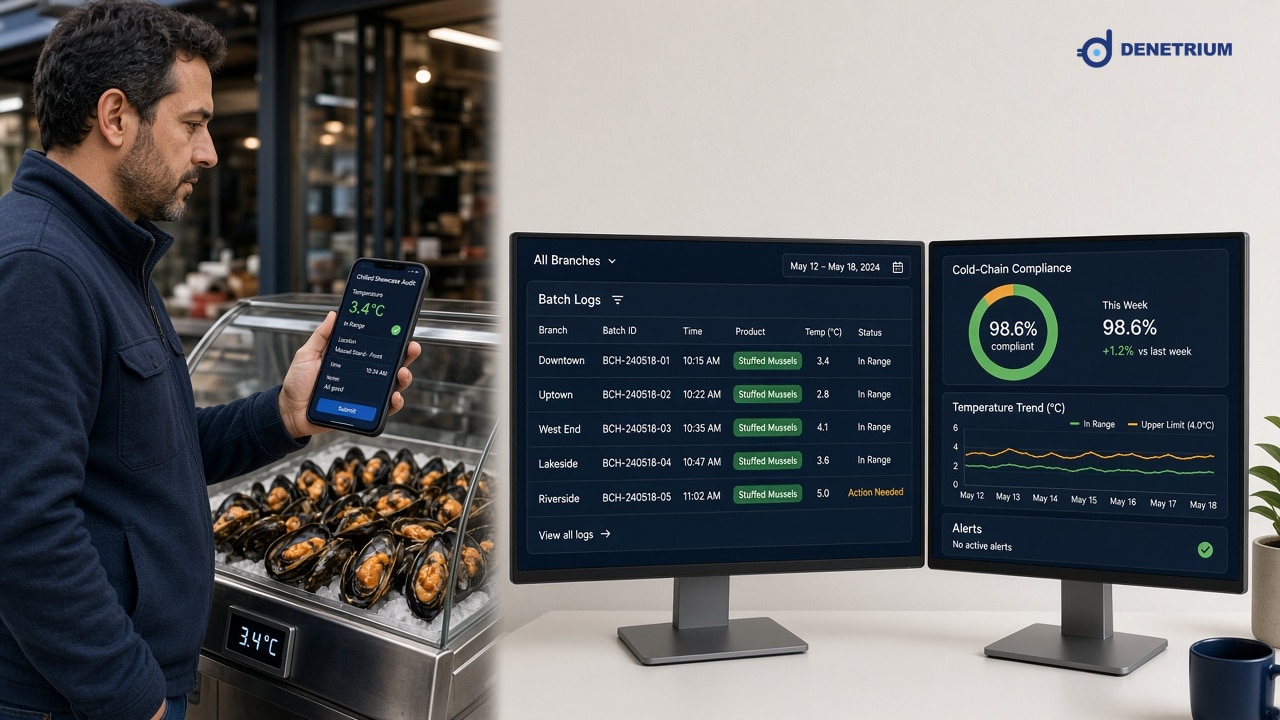
Specialty street food chains—spanning meatless kneaded bulgur rolls, grilled spiced offal skewers, and chilled stuffed mussels—represent some of the fastest-scaling franchise concepts in retail food service. However, handling ready-to-eat mixtures, offal preparations, and bivalve mollusks introduces the highest microbiological vulnerability profile in hospitality.
Ambient temperature abuse on display counters, undercooked core grilling temperatures, or a broken cold chain in stuffed seafood can compromise consumer safety and erase brand equity within hours.
Here is why paper checklists fail high-volume artisanal street food operations and how specialized digital audit software enforces end-to-end operational compliance across every location:
1. Ready-to-Eat Kneaded Display Cooling (+4°C / 39°F) and Shelf-Life
Artisanal spiced bulgur mixtures are consumed raw without terminal heat pasteurization. Countertop temperature increases or direct display lighting accelerate fermentation, causing premature souring and bacterial counts to spike.
The Operational Hazard: Shutting off counter chillers overnight, blending leftover staging with fresh morning batches, or skipping lettuce sanitization baths.
The Denetrium Solution: Shift staff log display well temperatures and master batch/lot tags into the mobile audit app upon opening. Daily fresh produce chlorination wash logs are verified with mandatory photo evidence.
2. Stuffed Mussel Cold-Chain Integrity (+2°C / +4°C)
Combining cooked rice and bivalve seafood creates a high-risk matrix for pathogens like Bacillus cereus and marine vibrios unless rapidly chilled and maintained continuously under strict refrigeration.
The Operational Hazard: Displaying seafood trays at ambient outdoor temperatures or sourcing from uncertified wild-harvest suppliers to cut procurement costs.
The Denetrium Solution: Receiving teams scan centralized supplier batch barcodes, vehicle transport temperatures, and expiration hours via mobile devices. Maximum display timers trigger automated disposal alerts when ambient holding limits expire.
3. Core Grilling Temperatures and Raw Offal Separation
Skewered offal delicacies require complete thermal inactivation of surface and internal bacteria, reaching a minimum internal core temperature of +75°C (+165°F).
The Operational Hazard: Slicing through meat rounds too rapidly during peak evening surges and serving undercooked, lukewarm portions without secondary flattop searing.
The Denetrium Solution: District inspectors use digital needle probes to audit core cooking temperatures on the flattop. Photo-backed checklists ensure cutting knives and prep boards dedicated to raw skewers never touch finished toasted flatbreads.
4. Glove Discipline and Cash-to-Food Cross-Contact
In compact footprint street food outlets, frontline staff frequently alternate between handling physical cash registers and plating ready-to-eat food.
The Operational Hazard: Handling currency while wearing disposable gloves and subsequently wrapping cold rolls or opening mussel shells without glove replacement.
The Denetrium Solution: The "Cash Register & Food Contact Separation" checkpoint is configured as a critical fatal question in the audit software. Field supervisors conduct unannounced observational audits, logging glove-changing compliance directly from the floor.
5. Rogue Sourcing and Franchise Supply Integrity
Franchisees attempting to maximize local margins may secretly purchase off-spec spices, uncertified flatbreads, or black-market seafood outside authorized central supply chains.
The Denetrium Solution: Auditors verify dry storage and back-of-house inventories against approved distribution barcodes. Any unauthorized product immediately generates an automated high-severity Corrective and Preventive Action (CAPA) ticket sent to corporate franchise governance.
Protect your street food brand with verifiable operational controls. Deploy Denetrium’s audit software and digital audit framework to enforce uncompromised food safety and brand consistency from intake to customer handoff.