
Fast-casual pizza and artisanal flatbread chains operating across major retail centers and high-density delivery territories manage some of the highest order volumes and strictest delivery SLAs in hospitality.
Yet pizza dough is a living biological system. An ambient rise of just 2°C (3.5°F) triggers over-proofing, yielding sour, deflated crusts; while slight thermal drops across deck ovens result in gummy, underbaked dough or scorched bottoms. Furthermore, operational excellence does not end at the oven door: failing thermal delivery bags and neglected delivery gear deliver lukewarm, soggy products straight to customer doorsteps.
Here is why manual clipboards fail high-volume pizza concepts and how modern digital audit software enforces quality and food safety compliance across every location:
1. Dough Proofing Timers and Fermentation Staging (+2°C / +4°C)
Securing crust consistency across dozens of locations requires strict governance over dough fermentation curves and cold retarder holding.
The Operational Hazard: Using over-fermented, collapsed dough trays during peak volume to cut waste, producing dense, unchewable crusts that tarnish brand reputation.
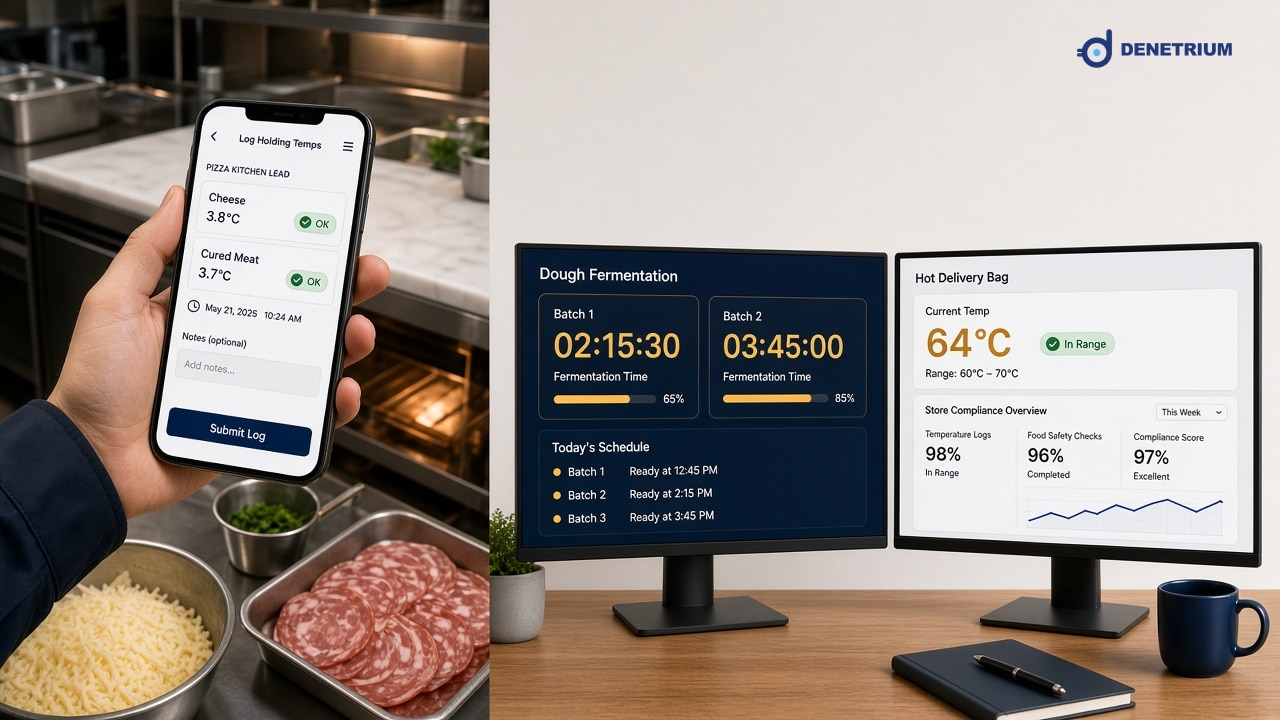
The Denetrium Solution: Batch mix timestamps, retarder entry times, and usable bake windows are logged via the mobile audit app. Trays exceeding maximum fermentation thresholds trigger automated alerts, preventing defective dough from reaching the make-line.
2. Make-Line Rail Temperature Control (The +4°C / 39°F Rule)
Topping rails sit directly adjacent to high-temperature ovens, exposing shredded mozzarella, sliced pepperoni, sausage, and dairy to radiant heat.
The Operational Hazard: Refrigerated rail blowers struggling during summer rushes, allowing perishable cheese and cured meats to climb into the bacterial danger zone (+8°C / +10°C).
The Denetrium Solution: Shift managers record core ingredient temperatures across the make-line rail three times daily using digital probe thermometers. Any reading above +4°C (+39°F) triggers an automated Corrective and Preventive Action (CAPA), requiring immediate pan rotation back into walk-in storage.
3. Deck and Conveyor Oven Calibration (Preventing Scorched or Raw Bakes)
The thermal balance between top impingement air and bottom stone hearth temperatures determines bake structure.
The Operational Hazard: Accumulation of burnt semolina flour imparting bitter carbon notes, or conveyor belt speed increased by staff to churn tickets faster during rushes.
The Denetrium Solution: Daily oven chamber vacuuming logs and digital temperature verification checks are mandated in the app. Photo verification of test bakes (top melt and bottom char) must be uploaded and validated before peak service begins.
4. Ingredient Rotation (FIFO) and Dairy Expiration Tracking
Cheese and proteins represent the primary line-item food cost in pizza operations.
The Denetrium Solution: "First-In, First-Out" (FIFO) discipline is verified across walk-in racks using structured mobile checklists. Open container secondary shelf-life labels and expiration dates are documented via photo uploads, eliminating expired food liabilities.
5. Delivery Thermal Bag Sanitation and Temperature Retention
A pizza baked to perfection in the kitchen can be ruined during the last mile.
The Operational Hazard: Thermal delivery bags accumulating grease, moisture, and odors, or worn insulation allowing box temperatures to collapse below safe holding thresholds during transit.
The Denetrium Solution: Weekly delivery audits verify thermal bag interior cleanliness, zipper integrity, and heated shelf performance. Damaged or soiled bags are flagged instantly with photos, generating direct replacement orders.
Never leave dough quality and food safety to unverified kitchen clipboards. Deploy Denetrium’s audit software and digital audit framework to enforce uncompromised consistency from dough mixer to customer doorstep.