
Whether scaling a boutique wood-fired Neapolitan concept or managing hundreds of fast-paced quick-service restaurant (QSR) pizza units, customer loyalty is anchored in a single, uncompromised expectation: receiving identical crust texture, sauce balance, thermal temperature, and food safety with every single order. The second a guest experiences soggy crust or under-portioned toppings at one branch that they loved at another, brand trust dissolves.
Commercial pizza operations represent an exact culinary and biochemical science. From dough fermentation windows and walk-in cooler temperatures to sauce-ladle volumetric accuracy and conveyor bake velocities, a microscopic operational deviation triggers immediate customer churn and margin-eroding ingredient waste.
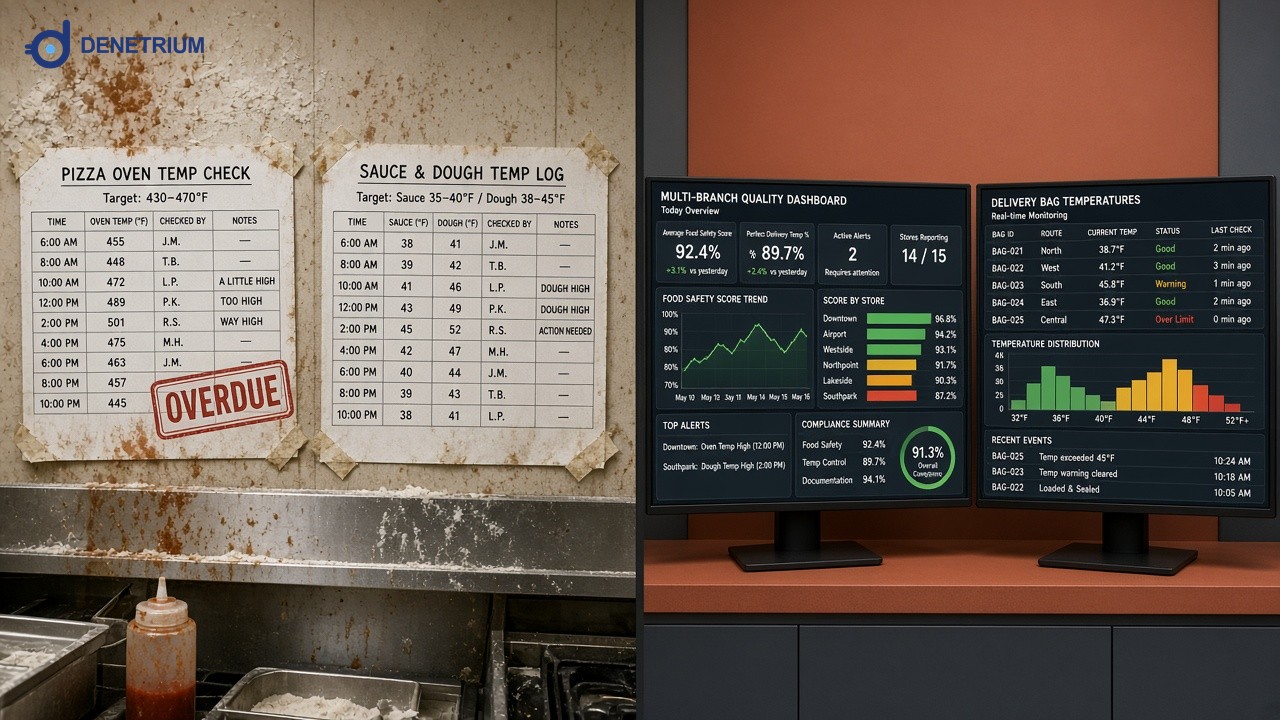
Yet across pizza franchise networks, operational compliance frequently breaks down on the frontline:
Dough Fermentation and Proofing Schedules are tracked casually on flour-dusted whiteboards or moisture-damaged paper logs, causing under-proofed or sour over-fermented dough balls to enter the oven,
Make-line refrigerated rail temperatures fluctuate above the critical +4°C (+39°F) safety threshold during peak rush hours, creating severe bacterial growth and spoilage hazards,
Line cooks bypass digital scales under heavy volume, adding erratic cheese and meat portions that quietly destroy store-level gross margins,
Thermal delivery bags (hot-bags), driver grooming, heated dispatch staging, and rider safety equipment escape routine audits, resulting in lukewarm deliveries and safety liabilities,
District managers spend hours compiling disparate mobile chat photos and clipboards, leaving corporate headquarters blind to chronic operational drift.
Enforcing uniform franchise standards cannot survive on stained clipboards or unmonitored kitchen logs. Scaling brand equity requires a dedicated digital audit software platform that automates prep-line verifications, logs thermal telemetry with cryptographic timestamps, and enforces closed-loop CAPA remediation.
Here is how Denetrium’s enterprise audit tracking program, online audit, and mobile audit application modernize pizza chain operations across 5 core pillars:
1. Recipe Portioning and Make-Line Visual Compliance Checklists
Topping distribution, crust rim dimensions, and ingredient weight must match corporate culinary specifications precisely.
The Denetrium Approach: Build dynamic inspection programs across Dough Stretching, Sauce Ratios, Cheese Weigh-ins, and Conveyor Dwell Times.
Auditors weigh randomly sampled prepared pizzas against standardized digital scales inside the mobile audit app, matching raw builds with side-by-side reference planogram images to eliminate portion giveaways.
2. QR-Linked Cold Rooms, Proofer Cabinets, and Oven Temperature Audits
Dough integrity depends on temperature stability; oven thermal consistency dictates uniform bake quality.
The Denetrium Approach: Walk-in refrigeration units, proofer cabinets, pizza make-line rails, and stone/conveyor ovens are tagged with durable QR codes.
Supervisors scan assets on shift walkthroughs, recording probe thermometer displays with mandatory live camera captures. If cold rail temperatures drift above critical thresholds, the system flags high-priority quarantine tickets instantly.
3. Thermal Delivery Bag Sanitation and Rider Fleet Audits
Flawless kitchen execution is meaningless if pizzas arrive cold, collapsed, or delivered unsafely.
The Denetrium Approach: Thermal delivery hot-bags, heating shelf connections, driver vehicle inspections, and protective helmet gear are audited directly on mobile devices.
Timestamped photo evidence verifies clean bag interiors and thermal heating pad functionality, safeguarding off-premise dining quality.
4. Root-Cause CAPA Workflows for Food Safety and Guest Complaints
Recurring customer reviews citing burnt bases, missing toppings, or cold deliveries require systematic operational remediation.
The Denetrium Approach: Every observed non-conformity or chronic guest complaint instantiates an assigned, deadline-tracked Corrective and Preventive Action (CAPA) ticket.
Store managers execute guided 5-Why root-cause investigations (e.g., miscalibrated conveyor motor speed vs. inadequate oven belt cleaning) and upload authenticated proof of retraining before the District Lead clears the ticket.
5. Multi-Unit Benchmarking and Real-Time Executive Dashboards
Franchise operations directors need instant visibility into branch-level recipe compliance and food waste metrics.
The Denetrium Approach: Quality compliance scores, mystery diner ratings, food safety audit passes, and resolution velocities across all locations consolidate into a live cloud dashboard.
Head-office operations teams pinpoint underperforming kitchen lines immediately, deploying targeted field training to preserve brand reputation.
Do not surrender your pizza chain’s brand equity and product margins to greasy paper sheets. Deploy Denetrium’s audit software, online audit engine, and audit tracking program to enforce kitchen perfection from the raw dough batch to the final delivered slice.