
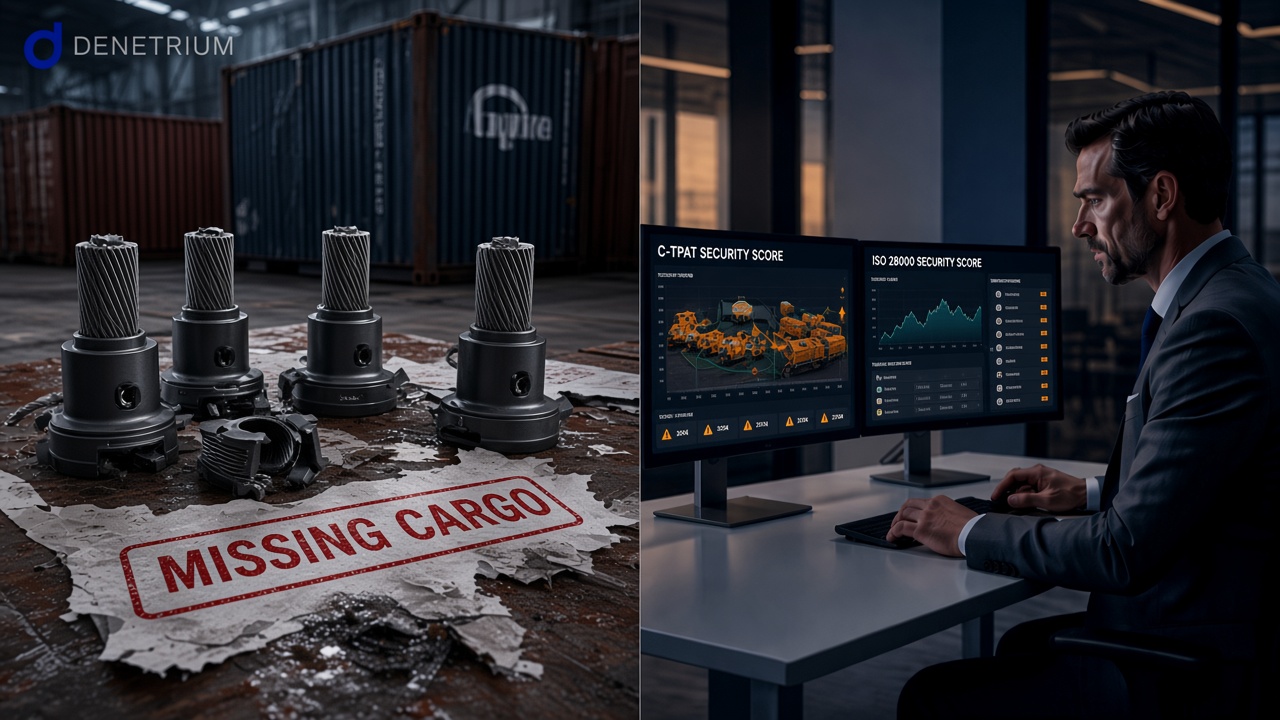
In modern international trade, moving finished freight from factory floors to overseas customers relies on a vulnerable multi-modal web: ocean container lines, intermodal railheads, over-the-road trucking, and bonded distribution hubs. Across transit corridors, acute risks like cargo theft, contraband smuggling, seal tampering, and unauthorized vehicle access create catastrophic exposures—not merely destroying product value, but triggering immediate customs seizures, blacklisting, and the loss of Tier-1 vendor contracts. The global framework designed to fortify this infrastructure is the ISO 28000 Security Management System for the Supply Chain standard.
Fully aligned with C-TPAT (Customs-Trade Partnership Against Terrorism) and Authorized Economic Operator (AEO) frameworks, ISO 28000 mandates rigorous physical and procedural controls across manufacturing, packaging, warehousing, and transportation nodes.
Yet on the ground at loading docks and transfer yards, operational governance frequently breaks down:
The federally mandated 7-Point Container and Trailer Inspection (front wall, left side, right side, floor, ceiling/roof, inside/outside doors, and undercarriage) is treated as a perfunctory sign-off next to the driver; structural breaches or false compartments go undetected,
ISO 17712-compliant high-security bolt seal serial numbers are scribbled onto paper bills of lading, making it impossible to authenticate whether a seal was replaced en route,
Subcontracted regional motor carriers and warehouse laborers operate without systematic background verifications or security credentials,
When an independent external audit application assessor or customs border inspector investigates, logistics teams spend weeks unearthing physical loading photos and paper inspection slips.
Global freight security cannot rely on faded paper shipping manifests. Securing the chain of custody demands a dedicated digital audit software ecosystem that inspects physical assets, authenticates high-security seals, and enforces immediate closed-loop CAPA remediation.
Here is how Denetrium’s enterprise audit tracking program, online audit, and mobile audit application modernize ISO 28000 governance across 5 core pillars:
1. Dynamic Checklists Aligned with ISO 28000:2022 Frameworks
ISO 28000 governs physical perimeters, conveyance safety, cargo staging, and personnel vetting.
The Denetrium Approach: Build dynamic inspection programs across Factory Loading Docks, Freight Forwarder Hubs, Bonded Warehouses, and Fleet Operations.
Map ground verification points directly to ISO 28000 clauses (Clause 6 Risk Assessment, Clause 8 Operational Control), converting routine gate audits into unassailable compliance dossiers.
2. Mobile 7-Point Container Inspections with Enforced Photo Evidence
Preventing the introduction of illicit cargo into legitimate freight streams is a fundamental legal obligation.
The Denetrium Approach: Frontline yard inspectors execute the standardized 7-point inspection directly inside the native mobile audit app.
Locking mechanisms, floorboards, side panels, and kingpin assemblies require live photo captures and timestamps. GPS geofencing verifies that inspectors are physically standing at the bay, eliminating fabricated desk audits.
3. ISO 17712 High-Security Bolt Seal Chain of Custody
Once doors latch, the affixed high-security bolt seal represents the sole physical proof of uncompromised transit.
The Denetrium Approach: The seal barcode or alphanumeric serial number is scanned via mobile camera, timestamped, and bound to the digital bill of lading alongside a live photograph of the fastened seal.
Receiving clerks match the seal’s digital fingerprint instantly upon arrival; any transit compromise is flagged before trailers enter the facility.
4. Root-Cause CAPA Tracking for Physical Security Vulnerabilities
A compromised perimeter fence, an inoperative dock surveillance camera, or an unvetted drayage carrier requires urgent containment.
The Denetrium Approach: Any observed non-conformity instantiates an assigned, deadline-tracked Corrective and Preventive Action (CAPA) ticket.
Logistics leads must complete guided 5-Why root-cause investigations, rectify the mechanical or procedural vulnerability, and upload photographic verification before the Lead Auditor clears the ticket.
5. 365-Day Readiness for Customs, AEO, and C-TPAT Inspections
Eliminate administrative panic when border customs officers, national security agencies, or third-party registrars initiate inspections.
The Denetrium Approach: Gate pass logs, container clearance certificates, perimeter tour histories, and driver credential audits sit encrypted in the cloud.
Generate official ISO 28000 audit packages and immutable digital audit trails with one click, proving end-to-end chain of custody during internal audit and external reviews.
Do not leave your international freight velocity and brand reputation to unmonitored paper manifests. Deploy Denetrium’s audit software, online audit engine, and audit tracking program to enforce total physical security from origin dock to destination portal.