
In modern enterprise architecture, the IT infrastructure is not merely a collection of server racks and networking nodes; it is the fundamental operational spine enabling core business capabilities. Software platforms, ERP backbones, cloud databases, and customer-facing interfaces must be delivered with guaranteed availability, quantifiable quality, and rigorous service continuity. The international benchmark governing this operational capability is the ISO/IEC 20000-1 Information Technology Service Management System (SMS) standard.
Bridging the best practices of ITIL (Information Technology Infrastructure Library) with verifiable management system rigor, ISO 20000 codifies strict controls across Incident Management, Problem Management, Service Level Management (SLA), and Change Governance.
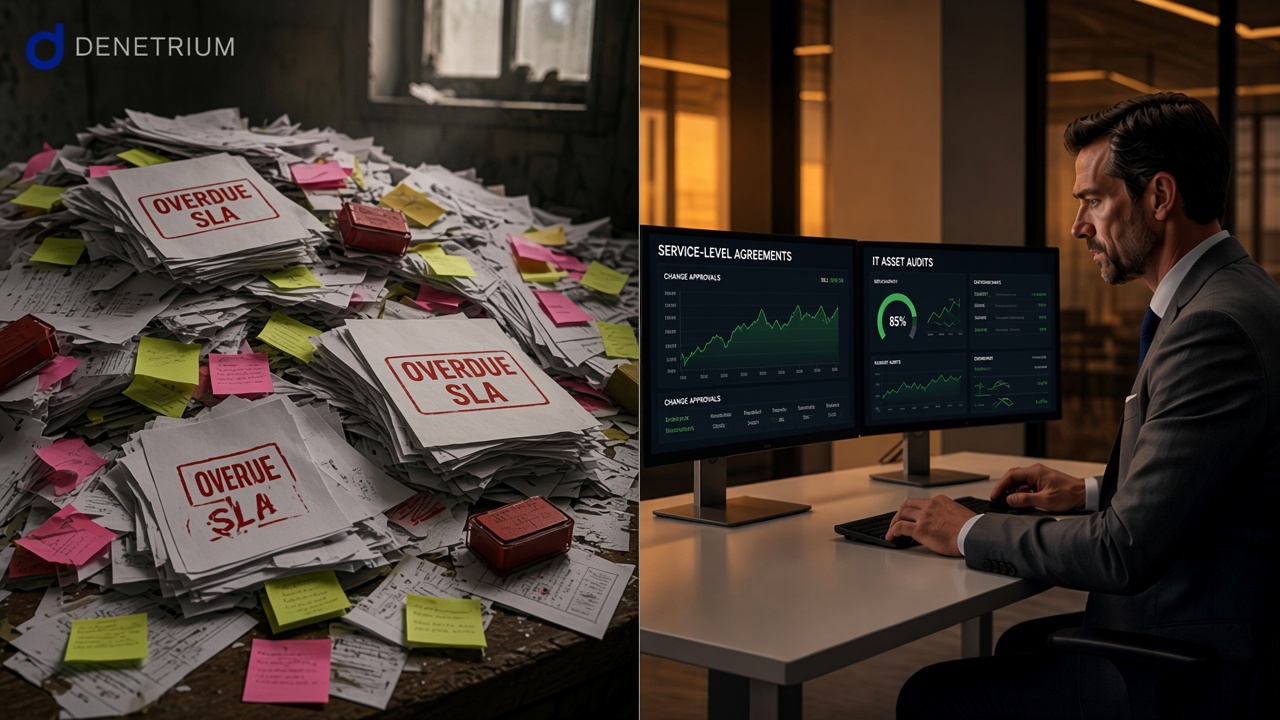
Yet on the ground within corporate IT teams, service delivery often suffers from operational opacity:
Service Level Agreements (SLAs) negotiated with business units exist on paper, while actual ticket resolution velocities remain hidden across disparate helpdesk databases,
Production software releases and infrastructure patches bypass formal Change Advisory Board (CAB) scrutiny under the guise of "emergencies," directly causing avoidable downstream outages,
Recurring systemic defects are treated as isolated incidents via quick-fix reboots rather than root-cause Problem Management workflows,
When independent external audit application assessors or institutional enterprise clients conduct audits, IT leads spend weeks manually stitching together release logs and configuration records.
High-velocity IT service environments cannot be governed through static spreadsheets and unstructured email approvals. Maintaining audit-proof operations requires a dedicated digital audit software platform that tracks SLA drift, verifies change controls, and enforces closed-loop CAPA remediation.
Here is how Denetrium’s enterprise audit tracking program, online audit, and mobile audit application modernize ISO 20000 governance across 5 core pillars:
1. ISO/IEC 20000-1:2018 Dynamic Service Inspection Checklists
ISO 20000 governs more than 20 critical interrelated processes, spanning service design to supplier management.
The Denetrium Approach: Build dynamic inspection programs mapped across Service Level Management, Incident Resolution, Problem Root-Cause, and Change Enablement.
Align verification points directly with ISO 20000-1 clauses (Clause 8.2 Service Portfolio, Clause 8.5 Change Management, Clause 8.6 Service Level Management), transforming internal audits into verifiable compliance dossiers.
2. Guarding Production Environments via Change Governance Audits
Industry data confirms that approximately 80% of unscheduled mission-critical outages stem from unauthorized, unvetted infrastructure and application changes.
The Denetrium Approach: IT auditors verify production release gates, rollback contingency plans, and automated testing sign-offs directly inside the platform.
Bypassed procedures or missing approvals trigger real-time escalation alerts to the Chief Information Officer, maintaining an immutable, timestamped audit trail.
3. CMDB and Physical IT Asset Verification Rounds
Enterprise configuration registers (CMDB) must match physical and virtual infrastructure reality.
The Denetrium Approach: Server chassis, core switches, uninterruptible power units, and hardware security modules (HSM) are tagged with durable QR codes.
Field IT auditors scan assets on site via the native mobile audit app, verifying maintenance statuses, rack cable hygiene, and physical port security via mandatory live photo captures and timestamps. Fabricated desk audits are eradicated.
4. Root-Cause CAPA Tracking for Chronic Systemic Outages
A critical database crashing multiple times a month is not an incident to be rebooted; it is a systemic defect requiring structured resolution.
The Denetrium Approach: Every observed SLA violation or recurring service outage automatically instantiates an assigned, deadline-tracked Corrective and Preventive Action (CAPA) ticket.
Engineering leads must complete guided 5-Why root-cause investigations, upload staging-environment regression tests, and document permanent fixes before the Lead IT Auditor grants digital sign-off.
5. 365-Day Readiness for Institutional Client Reviews and External Audits
Eliminate the administrative burden of locating legacy logs when enterprise partners, financial regulators, or certification registrars initiate audits.
The Denetrium Approach: CAB approval histories, SLA performance scorecards, third-party cloud vendor audits, and capacity forecasts sit encrypted and indexed in the cloud.
Generate official ISO 20000 compliance portfolios and audit trails with one click, proving end-to-end service maturity during internal audit and external reviews.
Do not surrender your enterprise IT availability and client trust to loose emails and unverified spreadsheets. Deploy Denetrium’s audit software, online audit engine, and audit tracking program to transform IT service management into a resilient, measurable, and audit-ready competitive advantage.