
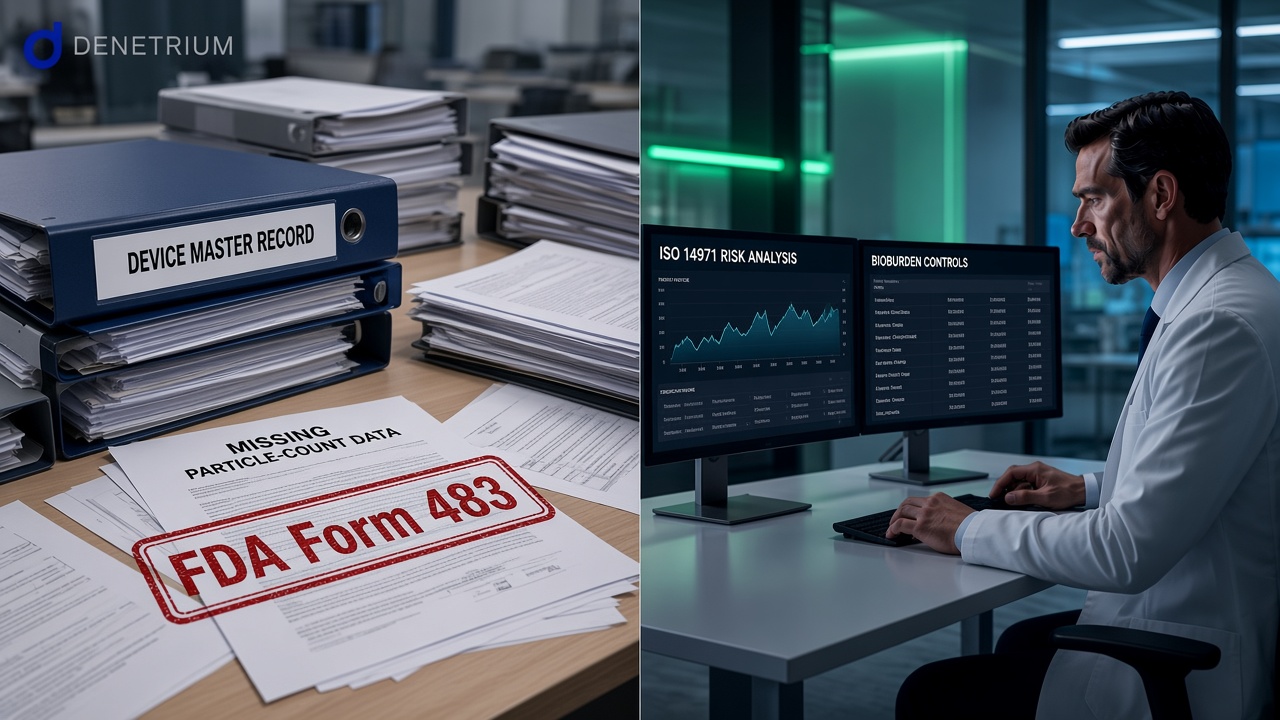
From orthopedic implants and surgical instruments to vascular catheters and in-vitro diagnostic kits, every single unit manufactured within the medical technology sector directly impacts human life. In this high-stakes environment, a microscopic particle excursion inside a cleanroom, an unvalidated sterile barrier seal, or an incomplete batch record is never just an operational defect—it poses immediate patient hazards, triggers global product recalls, revokes Notified Body CE marks, and exposes executives to criminal liability. The international benchmark governing this discipline is the ISO 13485 Medical Devices — Quality Management Systems standard.
Serving as the technical foundation for the European Medical Device Regulation (EU MDR 2017/745) and FDA Quality Management System Regulation (QMSR / 21 CFR Part 820), ISO 13485 demands exhaustive rigor across design controls, risk management (ISO 14971), cleanroom environmental controls, sterile packaging validation, and end-to-end Device History Record (DHR) traceability.
Yet inside many medical manufacturing facilities, operations remain burdened by fragile paper systems:
Cleanroom Differential Pressure and Airborne Particle Logs are recorded on clipboards hung outside airlocks; pressure drops caused by clogged HEPA filters escape detection between shifts,
Device History Records (DHR) span hundreds of physical paper sheets; missing technician signatures or unverified calibration logs stall batch release protocols for days,
Tensile burst tests, dye penetration validations, and ethylene oxide (EtO) sterilization charts remain fragmented across local binders,
When a Notified Body auditor or statutory health inspector executes an unannounced inspection, regulatory teams waste days locating retrospective verification records.
Ensuring patient safety cannot rely on faded paper binders and unverified spreadsheets. Sustaining regulatory compliance requires a specialized digital audit software ecosystem that automates environmental monitoring, validates batch records on the floor, and accelerates closed-loop CAPA remediation.
Here is how Denetrium’s enterprise audit tracking program, online audit, and mobile audit application modernize ISO 13485 governance across 5 core pillars:
1. Dynamic Checklists Aligned with ISO 13485:2016 and EU MDR
Medical device standards require absolute documentation across production, packaging, and post-market surveillance.
The Denetrium Approach: Build dynamic inspection programs across Cleanroom Environmental Controls, Sterile Barrier Packaging, In-Process Assembly, and Equipment Calibration.
Map ground verification checkpoints directly to ISO 13485 clauses (Clause 6.4 Work Environment and Contamination Control, Clause 7.5 Production and Service Provision), transforming routine floor walkthroughs into empirical regulatory dossiers.
2. Cleanroom Differential Pressure and Particle Monitoring Mobile Tours
A breach in cleanroom cascade pressure differentials compromises airlock integrity, allowing ambient contaminants to enter sterile zones.
The Denetrium Approach: Magnehelic differential pressure gauges, air showers, laser particle counters, and ESD grounding points are tagged with durable QR codes.
Quality inspectors scan the gauge via the native mobile audit app, logging live camera captures of pressure levels alongside cryptographic timestamps. Out-of-tolerance readings automatically halt line clearances and route high-priority tickets to facilities engineering.
3. Device History Record (DHR) and Process Verification
Every medical lot must maintain complete traceability linking raw material resins, machine parameters, and certified operators.
The Denetrium Approach: Ultrasonic weld dwell times, torque verifications, and pouch sealing temperatures are authenticated step-by-step on mobile tablets.
Incomplete checks or out-of-spec parameters lock the batch electronically, preventing unverified lots from proceeding to sterilization and eliminating fabricated records.
4. Root-Cause CAPA Tracking for Bioburden and Sterility Deviations
An elevated bioburden reading or compromised sterile pouch seal represents an immediate patient safety risk that demands structural remediation.
The Denetrium Approach: Observed non-conformities automatically instantiate an assigned, deadline-tracked Corrective and Preventive Action (CAPA) ticket.
Quality teams execute guided 5-Why root-cause investigations aligned with ISO 14971 risk management principles. Tickets cannot be closed without uploading verified re-validation reports and engineering sign-offs approved by the Lead Quality Auditor.
5. 365-Day Readiness for Notified Body and FDA Inspections
Eliminate administrative panic during unannounced audits by European Notified Bodies or the US FDA.
The Denetrium Approach: Environmental particle data, cleanroom gowning qualification logs, machine maintenance records, and CAPA dossiers sit encrypted in the cloud.
Generate comprehensive ISO 13485 compliance portfolios and immutable audit trails with one click, proving total control during internal audit and external regulatory reviews.
Do not surrender your medical device CE marks or patient safety to vulnerable paper records. Deploy Denetrium’s audit software, online audit engine, and audit tracking program to enforce world-class medical quality standards from cleanroom assembly to patient delivery.