
Casual-dining doner and kebab chains operating across major shopping centers and high-traffic avenues represent one of the fastest order cycles in quick-service hospitality. However, intense table turnarounds demand strict food safety and operational discipline.
A vertical rotisserie spit loaded with dozens of kilograms of layered meat cooks continuously from the exterior inward throughout the day. From the exact minute the meat is mounted to the vertical broilers, operational execution leaves zero room for error: unpasteurized inner layers, cutting blade sanitation, warm-holding sauce temperatures, and portion control require continuous verification.
Here is why static clipboards fail fast-paced rotisserie operations and how specialized digital audit software enforces end-to-end compliance across every location:
1. Spit Mounting Timestamps and Maximum Holding Limits
Food safety regulations and HACCP guidelines set strict boundaries regarding how long an active vertical meat cone may remain exposed to heating elements. Allowing a raw meat block mounted at 10:00 AM to linger until late evening at tepid temperatures creates severe microbiological risks.
The Traditional Vulnerability: Spit mounting times are recorded on wipe-clean whiteboards or paper sheets, making them easily erased or altered during shift changes.
The Denetrium Approach: Kitchen leads record batch/lot numbers and mounting times via the mobile audit app, backed by a live timestamped camera photo of the spit. The system initializes an automated countdown timer, dispatching escalation alerts to management as the maximum holding window approaches.
2. Slicing Knife Sanitation and Electric Slicer Hygiene
Whether carved using traditional long curved blades or automated handheld electric rotary slicers, slicing tools remain in constant contact with meat fats and juices.
The Traditional Vulnerability: Wiping blades with dry bar towels during peak service or skipping hone/blade sanitizing baths allows cross-contamination to transfer directly onto freshly cut cooked slices.
The Denetrium Approach: Shift checklists enforce sanitized dip tank verifications and blade housing cleanings. Area supervisors log close-up photographs of rotary blade assemblies during unannounced inspections to ensure zero residual buildup.
3. The Hot-Holding Chain: Tomato Sauce, Melted Butter, and Bain-Maries (Min. +65°C / 149°F)
In signature plated kebab presentations, bubbling melted butter and rich tomato base sauces serve as both flavor delivery and microbiological thermal barriers.
The Traditional Vulnerability: Bain-marie holding temperatures often drop into the lukewarm danger zone (+50°C) during mid-afternoon lulls.
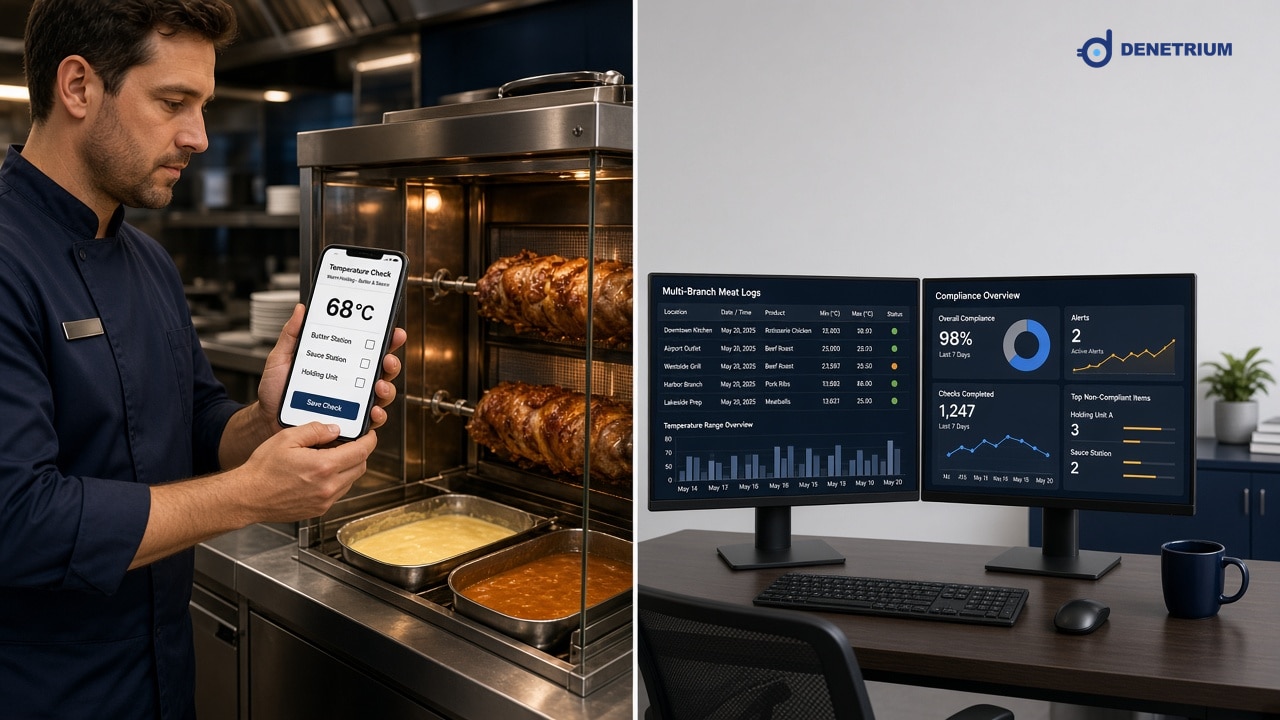
The Denetrium Approach: Shift supervisors take digital probe readings of butter warmers and sauce containers. Any temperature recorded below the critical +65°C threshold triggers an automated Corrective and Preventive Action (CAPA), requiring immediate heat recalibration.
4. Flatbread Freshness, Cold Meze, and Yoghurt Storage
Supporting items such as freshly baked pitas, lavash flatbreads, seasoned onions, and portioned yoghurts shape guest perceptions of brand quality.
The Denetrium Approach: Bread holding stations and warming drawer rotations are inspected against standard checklists. Undercounter refrigeration holding yoghurts and cold dips is monitored to verify the cold chain remains locked below +4°C (+39°F).
5. Portion Grammage, Yield Tracking, and Waste Governance
In high-volume rotisserie operations, raw meat yield is the primary cost driver. Serving a 150g portion at 130g damages guest retention; serving it at 170g burns operational margins.
The Denetrium Approach: Area managers conduct random weight audits on 5 finished plates, uploading scale photos directly into the app. Unexplained meat shrinkage or undocumented scrap entries are flagged automatically on executive dashboards.
Never leave food safety and brand consistency to unmonitored kitchen routines. Deploy Denetrium’s audit software and digital audit framework to enforce uncompromised standards from the rotisserie burner to the dining table.