
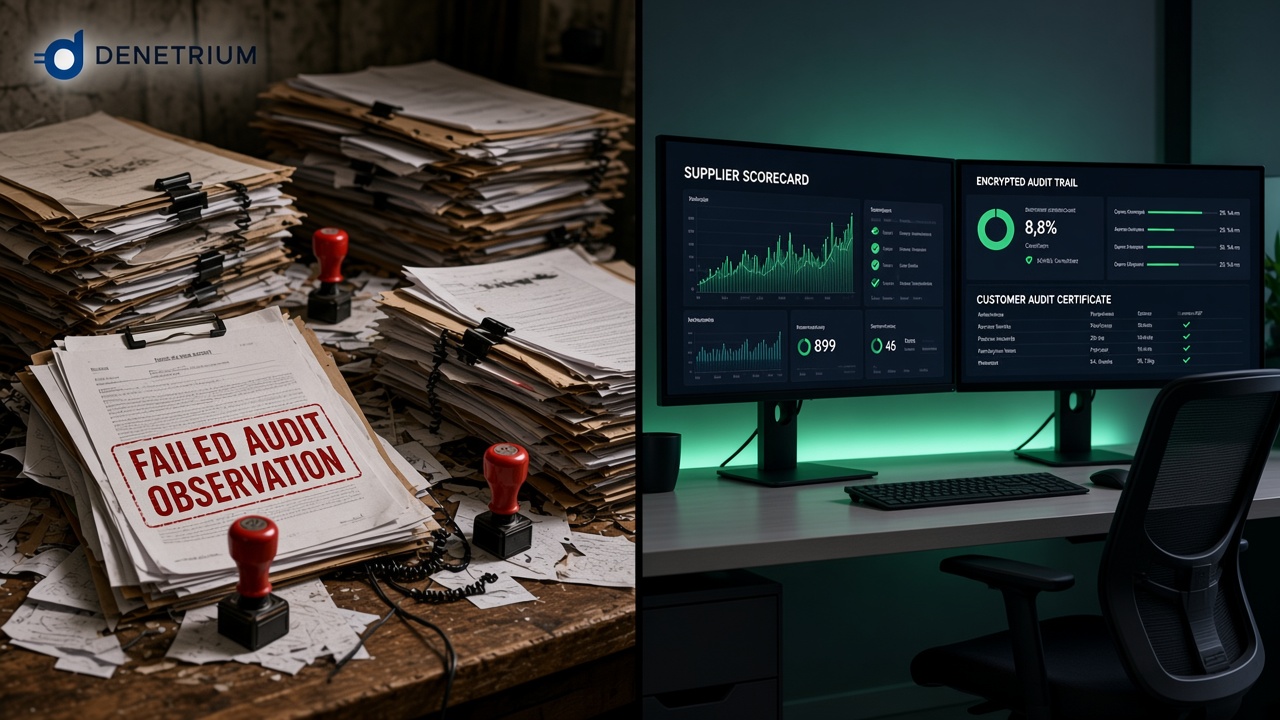
When competing to supply global automotive original equipment manufacturers (OEMs), international retail conglomerates, or tier-one industrial leaders, procurement decisions are never governed by promotional sales decks alone. Vendor qualification hinges entirely upon what independent third-party assessors (3rd Party Audits) or client quality assurance engineers (Customer / 2nd Party Audits) observe directly on your manufacturing floor.
Modern enterprise buyers cannot afford operational blind spots within their supply base. A single out-of-spec lot, an unvalidated engineering change, or an undocumented safety hazard inside a supplier plant can shut down the customer’s assembly lines or trigger millions in product recall liabilities. For this reason, institutional procurement leaders deploy rigorous, scheduled, and unannounced supplier quality audits to qualify, evaluate, and monitor manufacturing partners.
Yet inside many supplier facilities, preparing for external customer audits triggers operational panic:
Customer-specific questionnaires spanning hundreds of proprietary requirements are handled via scattered spreadsheets, leaving historical lot release test records untraced,
Quality governance across outsourced secondary subcontractors remains unmonitored; when third-party auditors request tier-two vendor compliance data, the audit stalls,
Non-conformities noted during prior customer visits were nominally addressed, but verifiable Corrective and Preventive Action (CAPA) documentation was never compiled—a primary driver of vendor de-listing,
When an independent external audit application assessor or client inspection team enters the facility, engineering managers burn hours manually hunting through paper binders.
Winning high-value enterprise vendor contracts and protecting certified supplier status cannot rely on manual paper binders. Commanding customer trust requires a dedicated digital audit software ecosystem that unifies supplier metrics, authenticates ground compliance with immutable timestamps, and accelerates closed-loop remediation.
Here is how Denetrium’s enterprise audit tracking program, online audit, and mobile audit application modernize 3rd-party and customer audit governance across 5 core pillars:
1. Dynamic Checklists Tailored to Customer-Specific Requirements (CSR)
Every tier-one institutional client enforces proprietary quality manuals, rating rubrics, and process standards (e.g., VDA 6.3, Formel Q, Q1, BIQS).
The Denetrium Approach: Configure dynamic inspection catalogs mirroring exact customer manuals or accredited third-party registrar criteria (SGS, TÜV, Bureau Veritas).
Execute internal mock walkthroughs against these specific rubrics prior to customer arrivals, pinpointing and neutralizing compliance gaps before client inspectors arrive.
2. Mobile Audits Across Subcontractor & Sub-Tier Supply Chains
When enterprise clients audit your business, their scope encompasses the subcontractors and raw material processors feeding your lines.
The Denetrium Approach: Internal supplier quality engineers audit sub-tier vendor operations directly on site via the native mobile audit app.
Mandatory GPS geofencing, live photo captures, and timestamps prove physical presence inside the subcontractor’s workshop, eradicating fabricated desk audits.
3. Transparent External Audit Portals for Client Assurance
Handing client auditors thick paper binders and unindexed flash drives projects administrative disorganization.
The Denetrium Approach: Grant visiting customer auditors controlled, encrypted digital read-access or export branded compliance dossiers with one click.
Calibration certificates, lot release validations, training records, and vendor compliance ratings display within an immutable digital audit trail that confirms operational control.
4. Root-Cause CAPA Tracking Powered by Customer-Centric Rigor
Resolving a customer-identified defect requires more than a cosmetic fix; clients demand proof that the failure mode cannot recur.
The Denetrium Approach: Every customer-flagged non-conformity automatically instantiates an assigned, deadline-tracked Corrective and Preventive Action (CAPA) ticket.
The team must execute a structured 5-Why root-cause investigation, attach photographic before-and-after proof, and document updated work instructions before the Lead Auditor clears the ticket for client submission.
5. 365-Day Readiness for Unannounced Client Walkthroughs
Eliminate the chaos of preparing for unannounced client supplier evaluations.
The Denetrium Approach: Shift inspections, calibration records, process parameter logs, and maintenance sign-offs sit encrypted and verified in the cloud.
The moment client auditors arrive at reception, the facility is immediately audit-ready, proving operational excellence during internal audit and high-stakes third-party reviews.
Do not leave your high-margin customer accounts and global vendor ratings to messy paper clipboards. Deploy Denetrium’s audit software, online audit engine, and audit tracking program to turn customer and third-party audits into a permanent competitive advantage.