
Casual-dining chicken chains, crispy tender concepts, and wok-seared poultry brands represent one of the fastest-growing categories in quick-service dining. However, poultry operations operate under the slimmest margin for microbiological error in food service.
Raw poultry is uniquely susceptible to dangerous pathogens such as Salmonella and Campylobacter. The exact temperature at which raw tenders marinate, the chemical breakdown index of commercial frying oil, and the verification of core bone-side temperatures dictate both consumer safety and brand viability.
Here is why manual clipboards fail high-volume chicken concepts and how modern digital audit software enforces airtight quality and safety controls across every location:
1. Frying Oil Degradation and Total Polar Materials (TPM) Verification
In fried chicken concepts, shortening and cooking oil constitute both the primary operational expense and the foundation of product texture. Heated continuously at 170°C–180°C (340°F–350°F), oils degrade, darken, and develop harmful Total Polar Materials (TPM).
The Ground Reality: Operators looking to cut food costs may delay oil discard cycles or skip daily filtration, yielding dark, bitter breading that burns on the outside while leaving the meat raw inside.
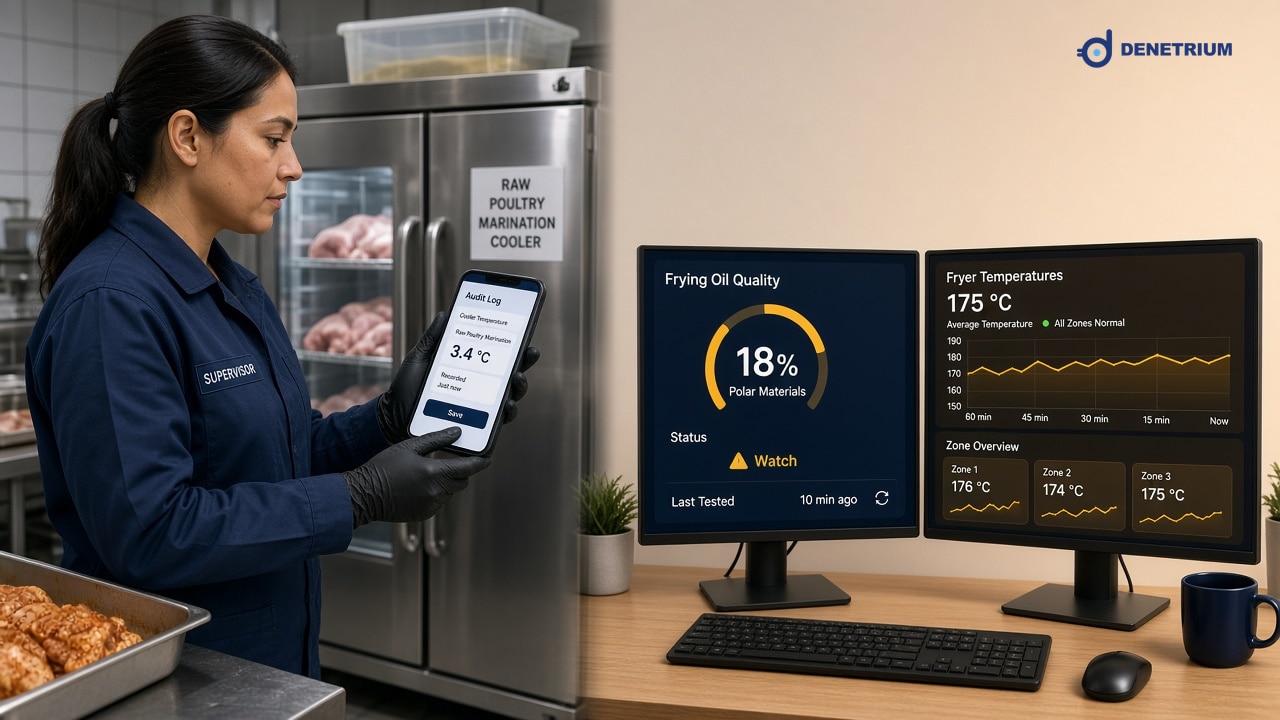
The Denetrium Solution: Shift leads verify digital TPM oil readings daily via the mobile audit app. When oil reaches the warning threshold (approaching 24% TPM), automated alerts prompt mandatory filtration or oil replacement, triggering closed-loop task verification.
2. Core Internal Cooking Temperatures (Min. +75°C / 165°F to +82°C / 180°F)
In bone-in chicken cuts and thick breast fillets, breading browns rapidly under pressure frying, frequently creating an illusion of doneness while the interior meat remains undercooked.
The Ground Reality: Staff shortening cook timers during peak rushes to turn tickets, serving undercooked poultry with pink, unpasteurized bone marrow.
The Denetrium Solution: Daily station checklists enforce photo proof of digital probe thermometer readings inserted into the thickest part of the meat. Checklist completion is blocked until verified thermal records are authenticated in the internal audit log.
3. Marination Staging and Cold-Chain Integrity (+2°C / +4°C)
Marination builds signature flavor profiles; however, extended seasoning contact must occur exclusively within calibrated refrigerated holding.
The Ground Reality: Leaving marinated batches on stainless prep tables at ambient room temperature during service surges causes bacterial counts to multiply rapidly.
The Denetrium Solution: From raw intake to walk-in marination racks, temperature checkpoints are logged with tamper-proof timestamps. The platform tracks batch start times and maximum holding limits, preventing product spoilage.
4. Cross-Contamination and Cutting Board Sanitation
Equipment, gloves, and containers touching raw chicken must never cross into ready-to-eat stations, side prep areas, or packaging lines.
The Denetrium Solution: District managers verify dedicated yellow/red cutting board usage, raw-poultry-only tongs, and glove change discipline through photo-backed digital audit inspections. Any operational breach triggers targeted retraining tickets for specific station cooks.
5. Heated Holding Cabinets and Texture Retention
Cooked chicken waiting for assembly must remain in holding cabinets at precise humidity and temperature levels.
The Denetrium Solution: Holding cabinet temperatures are audited to ensure holding temps remain strictly above +65°C (+149°F). Maximum hold timers enforce that over-held tenders are discarded with photographic waste tracking.
Never leave food safety and brand consistency to unverified kitchen clipboards. Deploy Denetrium’s audit software and digital audit framework to enforce uncompromised safety and operational standards from dock intake to customer tray.