
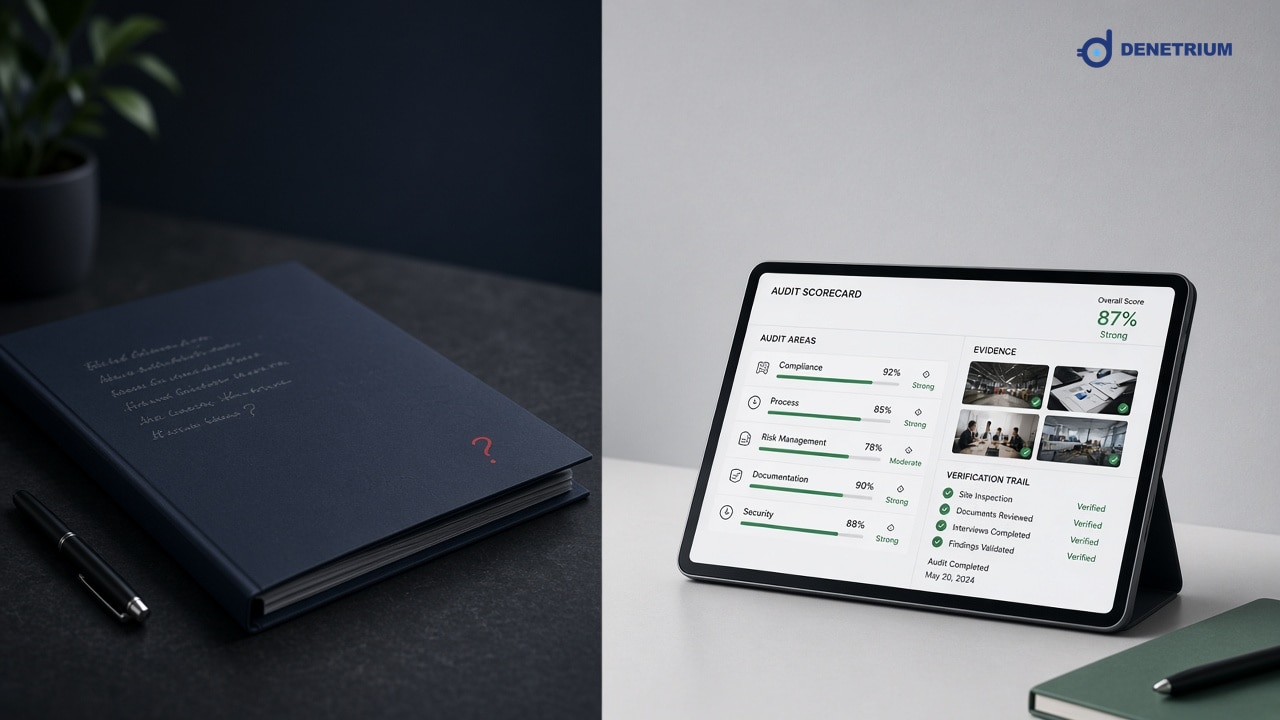
In traditional multi-location businesses, the phrase “the auditor is coming” triggers anxiety across the frontline: paper binders are scrambled together, displays are cosmetically staged, and staff become defensive. In conventional organizations, the audit has historically functioned as a punitive trap—a closed-door exercise designed to catch culprits rather than uplift performance.
Yet modern operations management recognizes a fundamental truth: the true goal of an audit is never to punish, but to protect standards and empower frontline teams.
Whether an inspection drives lasting operational excellence hinges entirely on one foundational principle: Transparency. When a location manager cannot see the objective scoring criteria, doubts the validity of negative findings, or receives a surprise disciplinary report weeks after the inspection, audits breed cynicism, concealment, and institutional friction.
Here is how modern digital audit platforms and specialized audit software replace suspicion with radical transparency on the ground:
1. Replacing “Subjective Bias” with Crystal-Clear Standards
The most damaging frontline friction stems from personal subjectivity: “The auditor felt it was untidy, but we think it’s perfectly clean.”
The Denetrium Approach: Subjective opinions are completely eliminated. Every checklist question embeds strict compliance definitions, acceptable tolerances, and visual reference photos. Store teams know exactly what is expected of them before the auditor ever walks through the door.
2. Concrete Photo Evidence Eliminates Denials
A handwritten note reading “Emergency exit obstructed: -10 points” naturally invites defensiveness: “That was never there while I was on shift.”
The Denetrium Approach: Inspectors must capture verifiable, timestamped photos through the mobile app. With GPS coordinates embedded, the observation becomes an indisputable fact rather than a subjective accusation. Trust remains intact because the evidence speaks for itself.
3. Instantaneous Reporting: No More “Surprise” Executive Reprimands
Under archaic systems, auditors compile notes in private and email a formal reprimand to executive leadership weeks later. Receiving delayed criticism breeds deep resentment among store managers.
The Denetrium Approach: The moment a walkthrough concludes, the system compiles the composite audit report. The store operator, regional supervisor, and headquarters leadership receive identical PDF summaries and scorecards at the exact same moment.
4. Constructive Growth Over Penalties: Transparent CAPA Collaboration
True transparency means not only highlighting what is broken, but clearly defining how to fix it.
The Denetrium Approach: Every identified non-conformity immediately converts into an open Corrective and Preventive Action (CAPA) ticket. The assigned owner, deadline, and required remediation steps are fully transparent. When the branch operator fixes the issue and uploads fresh verification, their quick turnaround is documented and recognized.
5. Network-Wide Benchmarking Without Favoritism
Frontline morale collapses when teams suspect regional bias: “Our inspector grades too harshly, while other regions get an easy pass.”
The Denetrium Approach: The executive dashboard benchmarks all facilities against identical scoring logic. Standardized algorithms level the playing field, creating fair, healthy accountability across the entire network.
Policing and covert inspections build cultures of evasion. Modernize your inspection program with Denetrium’s digital audit and audit software to build a culture of clarity, accountability, and operational excellence.